Do Photographers Need an ABN in Australia?
Sep. 24, 2026
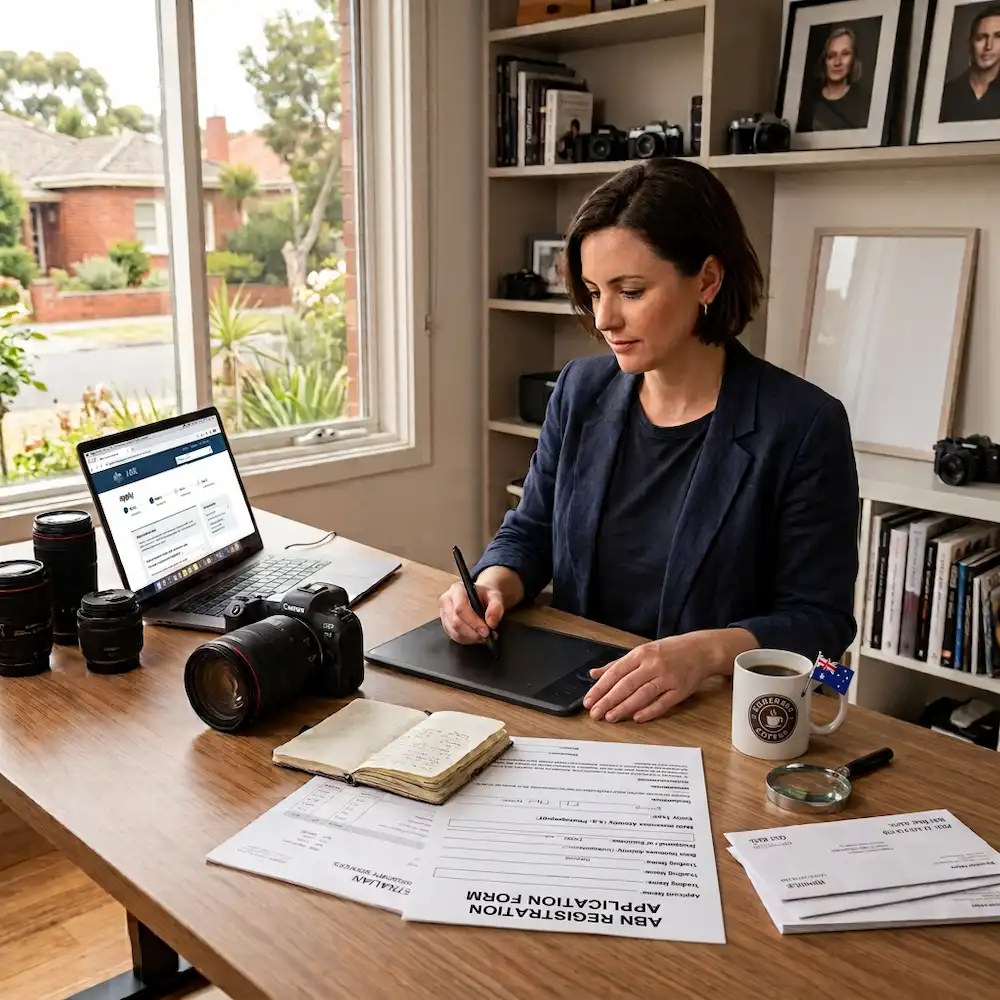
If you work as a photographer in Australia, you may need an Australian Business Number (ABN) when your photography activity is carried on as a business or enterprise. The way you work matters: an employee of a photography studio is treated differently from an independent photographer who finds clients, sets prices and manages their own business. This guide explains when photographers may be entitled to an ABN, how employment differs from genuine contracting, what business structure may apply, when GST registration becomes relevant, and what records and expenses photographers should consider.
Register in Just 5 Minutes Today!
Register your ABN nowLast update: Sep. 24, 2026
When Does a Photographer Need an ABN?
An Australian Business Number identifies a business or other organisation when dealing with government, businesses and the community. Not every person who takes photographs for money is automatically entitled to an ABN. The Australian Business Register considers whether you are carrying on or starting an enterprise in Australia.
For a photographer, the relevant question is therefore not simply whether you have received payment for a photo shoot. You need to consider how the photography activity operates, including its commercial purpose, regularity, organisation and scale. A photographer who regularly accepts clients, advertises services and operates independently may be carrying on an enterprise, while an occasional personal activity may have a different character.
The Australian Business Register identifies several features that can indicate a business activity. These include significant commercial activity, an intention to make a profit, repeated activity, organised business-like processes, record keeping and operating in a way that is similar to other businesses in the industry.
- Regular client work: You regularly provide photography services to paying customers or businesses.
- Commercial activity: You promote your services, quote for jobs, issue invoices or otherwise operate with a commercial purpose.
- Business organisation: You keep records, manage bookings, maintain equipment and organise your photography work systematically.
- Profit intention: You intend to generate income or profit from the activity rather than pursuing photography purely as a personal hobby.
No single factor automatically determines ABN entitlement. A photographer does not become entitled to an ABN simply because they own a professional camera, have a website or receive one payment. The overall circumstances of the activity need to be considered.
Employee, Contractor or Independent Photographer?
One of the most important distinctions for photographers is whether the work is performed as an employee or as an independent business activity. The Australian Business Register states that a person is not entitled to an ABN for work carried out as an employee. This remains the case even if the worker or business describes the arrangement as contracting.
For example, a photographer employed by a studio may receive wages, follow the employer's direction and work within the studio's employment arrangements. That employment activity does not become an independent business merely because the photographer owns equipment or occasionally invoices for other work.
An independent photographer can be in a different position. A photographer who finds their own clients, negotiates fees, controls how assignments are completed, manages their own equipment and carries responsibility for the business may be carrying on an enterprise.
| Working arrangement | ABN consideration |
| Employee photographer | An ABN is generally not used for the employment relationship. |
| Independent photography business | An ABN may be appropriate when the photographer is carrying on or starting an enterprise. |
| Genuine contractor | An ABN may be relevant where the photographer operates independently as a business. |
| Occasional personal activity | Receiving an occasional payment does not automatically establish ABN entitlement. |
Having an ABN is also not what determines whether someone is legally an employee or contractor. The actual working relationship matters. An organisation should not simply require an employee to obtain an ABN to avoid employment obligations. Similarly, a photographer should not assume that issuing invoices automatically makes an arrangement a genuine contractor relationship.
What About Freelance Photographers?
Freelance photographers commonly work for multiple clients and may provide services for events, weddings, businesses, publications, property listings, products or commercial campaigns. If the activity is organised and carried on as an independent business or enterprise, the photographer may be entitled to an ABN.
A freelance photographer may also have several different types of clients. One assignment might be for a business, another for an individual customer and another through an agency. The number of clients is not, by itself, the deciding factor. What matters is the overall nature of the activity and whether it amounts to carrying on or starting an enterprise.
Does a Sole Trader Photographer Need an ABN?
A photographer operating alone may choose to operate as a sole trader. The Australian Business Register describes a sole trader as an individual carrying on an enterprise and states that individuals carrying on an enterprise are entitled to an ABN. As a sole trader, the photographer and the business are not separate legal entities.
Operating as a sole trader can be suitable for an individual photography business, but an ABN does not create a separate company or provide a separate legal identity. The photographer remains responsible for the business, including its obligations and debts.
A sole trader uses their individual tax file number when lodging their individual tax return and reports business income and expenses through that return. The ABN is used to identify the business activity when dealing with customers, other businesses and government agencies.
- Sole trader: The photographer operates the business personally and is responsible for its activities and debts.
- Partnership: Two or more people or entities operate a business together and share responsibility according to the partnership arrangement.
- Company: A company is a separate legal entity registered with ASIC and has its own legal and tax obligations.
- Trust: A trust involves a trustee holding property or assets for beneficiaries and can have additional legal and administrative complexity.
The appropriate structure depends on the photographer's circumstances, plans and obligations. A photographer should consider professional advice when the business is growing, significant assets are involved, employees are being hired or the structure is becoming more complex.
What Does an ABN Mean for Photography Invoicing?
An ABN is commonly used when a photographer provides services to clients as a business. It helps identify the business on invoices and can be used when dealing with other businesses and government agencies. The ABN itself does not mean that the photographer is registered for GST.
GST registration is a separate tax registration. If a photography business reaches the relevant GST turnover threshold, registration may become compulsory. The current GST threshold for most businesses is $75,000 in annual GST turnover. The calculation is based on turnover rather than profit.
A photographer below the GST threshold can generally choose whether to register for GST, subject to the applicable rules. If the photographer is registered for GST, they generally need to account for GST on taxable sales and meet the associated reporting obligations.
| Registration | What it does |
| ABN | Identifies the business or enterprise when dealing with government, businesses and the public. |
| GST registration | Registers the business for goods and services tax obligations when required or chosen. |
| Business name registration | Allows a business to operate under a registered name where registration is required. |
| TFN | Identifies the taxpayer for income tax administration. |
It is important not to confuse these registrations. A photographer can have an ABN without being registered for GST, provided GST registration is not otherwise required. Likewise, registering a business name is different from obtaining an ABN.
When Does a Photographer Need to Register for GST?
Most photography businesses need to monitor their GST turnover as their income grows. The ATO states that a business generally must register for GST when its GST turnover reaches $75,000 or more, or when it starts a new business and expects its turnover to reach the threshold. The rules also include specific situations where registration can be required regardless of turnover.
GST turnover is based on business income rather than profit. A photographer therefore needs to monitor relevant sales rather than simply looking at the amount left after deducting camera equipment, software, travel or other business expenses.
If a photographer expects to reach the GST threshold, registration should be considered before the threshold creates an obligation. The ATO explains that once the relevant threshold is reached, the business generally has 21 days to register. The timing can depend on whether current or projected GST turnover reaches the threshold.
Once registered, the photographer needs to understand how GST applies to their services and invoices and may need to lodge Business Activity Statements. A photographer who is not registered for GST should not simply add GST to an invoice.
What Photography Expenses and Records Should You Keep?
Running a photography business can involve substantial equipment and operating costs. Cameras, lenses, lighting equipment, memory cards, editing software, storage, insurance, travel, advertising and other costs may be relevant to the business. Whether a particular expense is deductible depends on the applicable tax rules and how the expense relates to earning assessable business income.
Photographers should keep records that support their income and expense claims. The ATO generally requires records supporting deductions to be retained for the relevant period, with five years applying in many circumstances. Good record keeping can also make it easier to separate business and private expenditure.
- Equipment: Keep invoices and records for cameras, lenses, lighting equipment, computers and other business assets.
- Software and subscriptions: Keep records for editing software, cloud storage, gallery services and other business subscriptions.
- Travel: Keep appropriate records for business travel, including the business purpose and relevant supporting documents.
- Marketing: Retain records for advertising, website costs, printed materials and other promotional expenses.
- Insurance: Keep records for relevant business insurance premiums and policies.
- Business services: Keep invoices for accounting, professional services, website services and other costs connected with the business.
Private and business use may need to be separated. For example, a camera used partly for private photography and partly for client work may require the business-use portion to be considered rather than automatically treating the entire cost as a business expense. The same principle can apply to phones, computers, internet services, vehicles and other mixed-use assets.
What If Photography Is Run From Home?
Some photographers operate from a home office or use their home as the base for editing, administration, client communication and storage. Home-based business expenses can involve specific tax rules, so photographers should keep records showing how the relevant expenses relate to the business.
Working from home does not by itself create an ABN requirement. The ABN question still depends on whether the photography activity is being carried on or started as an enterprise. Likewise, having a home office does not automatically make every household expense deductible.
How Can a Photographer Apply for an ABN?
Before applying, a photographer should make sure they are entitled to an ABN and have the information needed for the application. The Australian Business Register may ask questions about the business or enterprise, including its activities and commencement details. Applicants should provide accurate information and be able to support the fact that the business has commenced or that genuine steps have been taken to commence it.
For a sole trader photographer, the application relates to the individual's business activity. A company, partnership or trust has different requirements because the entity carrying on the enterprise is different. Changing business structures can also affect ABN arrangements.
If you are ready to start the registration process, you can use the ABN registration form to provide the relevant information for your application.
It is also useful to understand the distinction between an ABN and a business name. A photographer operating under their own personal name may not need to register a business name solely because they have an ABN. If they trade under another name, separate business name registration requirements may apply.
For photographers who work as independent contractors, the ABN for Contractors in Australia guide provides more information about ABN requirements and contractor arrangements.
Frequently Asked Questions About Photographer ABNs
Do wedding photographers need an ABN?
A wedding photographer may be entitled to an ABN when they are carrying on a photography business or enterprise. Regular bookings, advertising, client contracts, pricing, invoicing and business records can all be relevant factors. A person who photographs a friend's wedding occasionally for a personal favour is not automatically in the same position.
Do photographers working for a studio need an ABN?
Not for work that is genuinely performed as an employee. The Australian Business Register states that employees are not entitled to an ABN for their employment activity. If the photographer also operates a separate independent photography business, that separate activity can be considered independently.
Can a photographer have an ABN without registering for GST?
Yes. An ABN and GST registration are separate. A photographer carrying on an enterprise can have an ABN without registering for GST when GST registration is not otherwise required. GST registration generally becomes compulsory for a business when its GST turnover reaches the applicable threshold.
Does an ABN make a photographer a contractor?
No. An ABN does not determine whether a worker is an employee or contractor. The actual working relationship and circumstances are relevant. A business should not use an ABN as a substitute for correctly determining employment status.
Does a photographer need an ABN for occasional paid shoots?
Not necessarily. Receiving a payment does not automatically mean that a person is carrying on an enterprise. The nature, scale, frequency, organisation and commercial character of the photography activity need to be considered.
Can a photographer operate as a sole trader?
Yes. A photographer can operate as a sole trader when carrying on a business personally. A sole trader is not a separate legal entity from its owner, and the individual remains responsible for the business and its obligations.
Key Points for Photographers Considering an ABN
For most photographers, the central question is whether photography is being operated as an independent business or enterprise rather than simply performed as employment or a personal activity. There is no universal income amount that automatically determines ABN entitlement.
A photographer who is building a regular client base, promoting services, setting fees, issuing invoices, managing equipment and operating commercially may have strong indicators of an enterprise. The photographer should still consider all relevant circumstances rather than relying on one factor.
If the activity is a business, an ABN can form part of the photographer's registration and administration setup. GST, business name registration, income tax, record keeping and other obligations are separate matters that should be considered according to the photographer's circumstances.
Taking the time to classify the activity correctly before applying for registrations can help avoid treating employment, hobby activity and genuine business operations as if they were the same. When the circumstances are unclear or the business is becoming more complex, professional tax or legal advice can help clarify the appropriate approach.